Stink Bug Identification in Philadelphia

Brown marmorated stink bugs invade Philadelphia homes every fall by the thousands. Learn to identify and manage them.

📷 Text Us a Photo Free

3 Easy Ways to Get Your Bug Identified — Free

📷

Text a Photo

Text your bug photo to (215) 274-0754 and get a response from a pest expert within minutes.

Chat & Upload

Upload a photo and chat live with a pest identification expert from City Best Pest Control.

📧

Email a Photo

Email your photo to info@citybestpestcontrol.com with your location and we will identify it fast.

Stink Bug Life Stages

The brown marmorated stink bug (BMSB) is an invasive species from Asia that arrived in Pennsylvania in 1998. It's now one of the most prevalent fall invaders in Philadelphia — entering homes in September-October to overwinter.
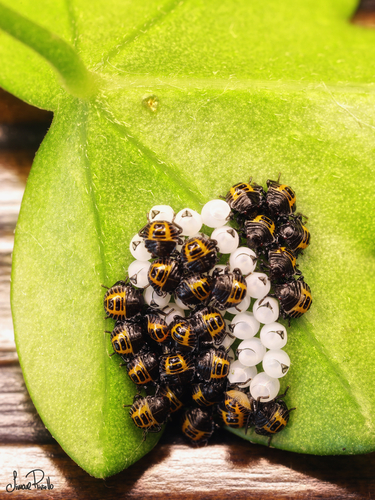
Stink bug egg mass on leaf underside
Stage 1

Egg Mass

Light green, barrel-shaped eggs laid in clusters of 20-30 on the undersides of leaves. Laid June-August. Female produces 3-5 egg masses per season. Hatch in 4-5 days.
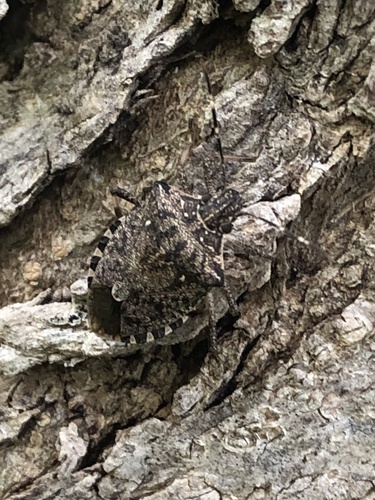
First instar stink bug nymph red and black
Nymph 1

1st Instar

2mm, bright red and black. Often confused with a different species. Does not yet have a fully developed scent gland. Cluster around egg mass in early instars, rarely dispersing alone.
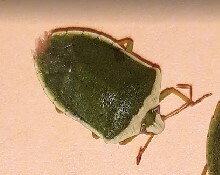
Mid-stage stink bug nymph 2nd and 3rd instar
Nymph 2-3

2nd-3rd Instar

3-6mm, alternating red/black banding on abdomen. Wing pads appear by 3rd instar. Begin feeding on plant tissue and fruit. Scent glands now functional.
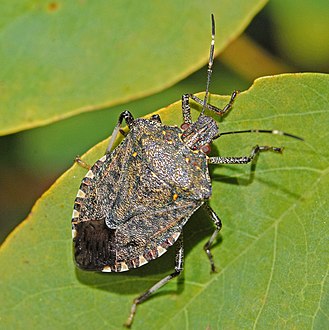
Late instar stink bug nymph 4th and 5th
Nymph 4-5

4th-5th Instar

8-12mm, mottled brown with visible wing pads extending past thorax. Now nearly identical to adult in color pattern. Very mobile. Peak feeding phase on late-summer fruits and vegetables.
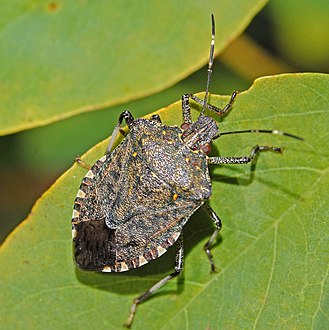
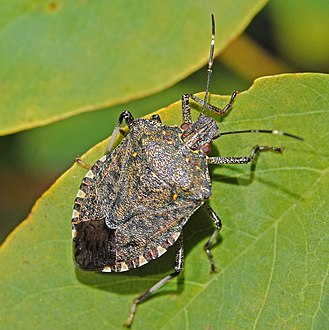
Adult brown marmorated stink bug Halyomorpha halys
Adult

Adult Stink Bug

14-17mm, mottled brown shield shape. Alternating dark/light banding on abdomen edge. Full wings. Releases foul odor (trans-2-decenal) when disturbed. Do NOT crush — odor attracts others.
Stink bugs overwintering cluster indoors
Overwinter

Overwintering Adult

Sept-Nov: seeks gaps in siding, window frames, and attics to overwinter in diapause. Emerge again in April-May. Vacuuming (not crushing) is the recommended removal method — seal the vacuum bag immediately.

Images: Wikimedia Commons — free educational use

What Do Stink Bugs Look Like?

The Brown Marmorated Stink Bug (Halyomorpha halys) is an invasive species from Asia that has become one of Philadelphia's most common fall nuisances. Key features:

  • Shape: Shield-shaped, roughly pentagonal body
  • Size: 14-17mm (about 2/3 inch) — thumbnail sized
  • Color: Mottled brown/gray, marbled pattern
  • Antennae: Alternating light and dark banding
  • Legs: Light banding on legs and abdomen edge
  • Odor: Releases a strong cilantro-like smell when disturbed or crushed

Similar Bugs

Stink bugs are often confused with squash bugs or shield bugs. The key difference is the alternating banding on antennae and the marbled brown pattern unique to the brown marmorated species.

Are Stink Bugs Dangerous?

✓ They do NOT bite

Stink bugs have piercing mouthparts designed for plants, not biting humans.

✓ They do NOT sting

No venom, no sting. They are a nuisance pest, not a health hazard.

✓ They do NOT breed indoors

Stink bugs come inside to overwinter and leave in spring. They do not reproduce in your home.

✕ They DO cause agricultural damage

Outside, they damage fruit trees, vegetables, and ornamental plants in Philadelphia gardens.

Why Stink Bugs Invade Philadelphia Homes

Stink bugs are aggregating insects that seek warm shelter in the fall as temperatures drop. In Philadelphia, the invasion typically peaks in September and October. They release a chemical signal (aggregation pheromone) that attracts others to the same location, which is why you suddenly go from zero to dozens.

How They Get In

How to Handle a Stink Bug

Never crush a stink bug indoors — this triggers the odor and can attract more. Instead: use a tissue or sealed bag to pick them up, flush them, or use a vacuum with a disposable bag. Seal the vacuum bag immediately after.

Stink Bug FAQ

When do stink bugs go away in Philadelphia?

Stink bugs typically emerge from overwintering in your walls and attic in March-April when temperatures rise. You will often see a second wave of sightings in spring as they try to find their way back outside.

Does killing stink bugs attract more?

Yes. Crushed stink bugs release an alarm pheromone that can attract other stink bugs to the area. Always remove them without crushing.

Can pest control eliminate stink bugs?

Professional exterior treatment with residual insecticides in late August/early September, combined with exclusion work (sealing entry points), can significantly reduce stink bug invasions. City Best Pest Control offers stink bug prevention services.

Found a Pest? Don't Wait.

Get a free inspection from City Best Pest Control — serving Philadelphia and surrounding counties.

Get a Free Inspection →
Free Bug ID 🔍
Quick options